
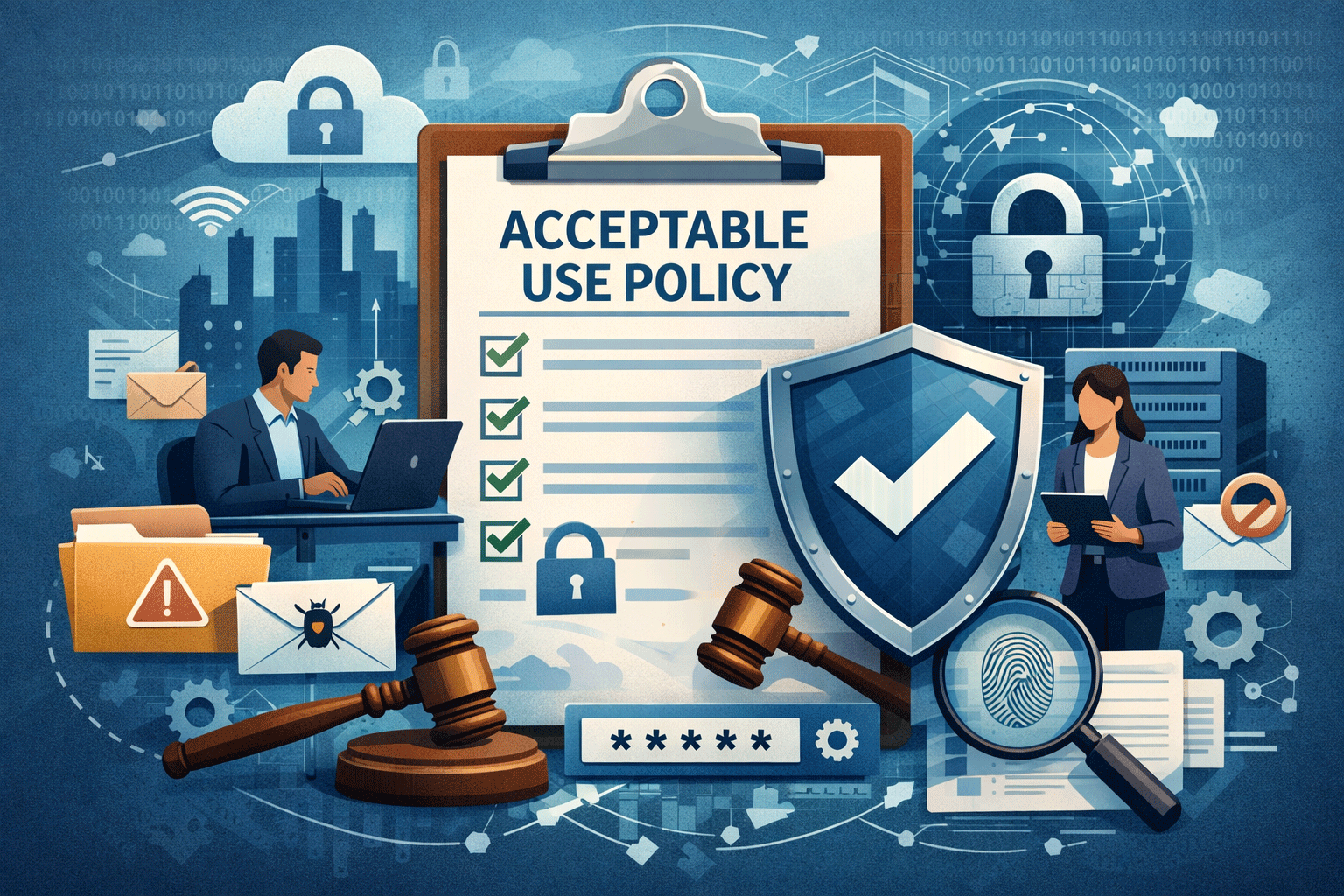
Acceptable Use Policy Drafting
In today’s digitally connected business environment, technology is the backbone of daily operations. From email and cloud platforms to mobile devices and remote access systems, employees interact with company technology constantly. Without clear guidelines, this access can expose organizations to security threats, legal risks, productivity loss, and compliance violations. An Acceptable Use Policy (AUP) establishes the foundation for safe, responsible, and secure use of company technology—protecting both your business and your employees.
An Acceptable Use Policy defines how company technology resources—including networks, computers, software, internet access, and data—may be used. It sets expectations, reduces risk, and ensures all employees understand their role in maintaining cybersecurity and protecting sensitive information. More importantly, it provides your organization with a clear, enforceable framework for preventing misuse and responding to incidents when they occur.
Why an Acceptable Use Policy Matters
Without a formal AUP, employees may unknowingly engage in behaviors that expose your organization to cyber threats such as malware, ransomware, phishing attacks, and data breaches. A well-crafted policy clearly outlines acceptable and prohibited activities, helping reduce human error—one of the leading causes of cybersecurity incidents.
An effective Acceptable Use Policy also strengthens your organization’s legal protection. It demonstrates due diligence, supports disciplinary action if misuse occurs, and helps ensure compliance with regulatory requirements such as data privacy laws, industry standards, and security frameworks. Whether your business must comply with HIPAA, PCI-DSS, SOC 2, or general data protection requirements, an AUP plays a critical role in supporting your compliance posture.
Additionally, a strong AUP promotes productivity and responsible technology use. By defining appropriate use of email, internet browsing, file sharing, and personal device access, your organization can minimize distractions, reduce bandwidth misuse, and maintain a professional digital environment.
Key Elements of a Strong Acceptable Use Policy
A comprehensive Acceptable Use Policy typically includes:
-
Permitted Use of Technology – Defines how employees may use company devices, networks, and systems for business purposes.
-
Prohibited Activities – Outlines unacceptable behavior such as unauthorized downloads, sharing confidential data, accessing harmful or illegal content, or bypassing security controls.
-
Data Protection & Confidentiality – Establishes guidelines for handling sensitive company and customer information securely.
-
Cybersecurity Responsibilities – Reinforces best practices such as password security, phishing awareness, software updates, and secure remote access.
-
Bring Your Own Device (BYOD) & Remote Work Guidelines – Addresses use of personal devices and secure access outside the office.
-
Monitoring & Enforcement – Explains that company systems may be monitored and details consequences for violations.
-
Legal & Compliance Alignment – Ensures the policy supports industry regulations and security standards relevant to your business.
Customized for Your Organization
No two businesses operate the same way, and a generic, template-based policy often fails to address real-world risks. We work closely with your leadership and IT teams to understand your technology environment, business operations, compliance requirements, and risk tolerance. The result is a customized Acceptable Use Policy tailored specifically to your organization—clear, practical, and enforceable.
Our approach focuses not only on documentation but also on usability. Policies that are too technical or overly complex often go unread. We craft policies that are easy to understand, aligned with your security strategy, and ready for employee adoption.
Protect Your Business with a Strong Foundation
An Acceptable Use Policy is more than a document—it is a critical component of your cybersecurity, compliance, and risk management strategy. It protects your organization from preventable threats, clarifies expectations, and strengthens your overall security posture.
Whether you are building your first formal policy or updating an outdated one, we help you create a clear, comprehensive, and legally sound Acceptable Use Policy that supports your business today and scales with you into the future.
Frequently Asked Questions: Acceptable Use Policy (AUP)
What is an Acceptable Use Policy (AUP)?
An Acceptable Use Policy (AUP) is a written set of rules that explains how employees and users may (and may not) use company technology—such as computers, email, internet access, software, cloud services, and data. It sets clear expectations and helps reduce security, legal, and compliance risks.
Why does my business need an Acceptable Use Policy?
Without clear guidance, employees may unintentionally expose your organization to threats like phishing, malware, ransomware, data leakage, or policy violations. An AUP helps protect sensitive information, supports cybersecurity best practices, improves consistency across teams, and provides a foundation for enforcement if misuse occurs.
What should be included in an Acceptable Use Policy?
A strong AUP typically includes permitted use, prohibited activities, password and account guidelines, data handling and confidentiality rules, remote access and BYOD expectations, approved software and downloads, email and internet usage standards, monitoring and privacy statements, and consequences for violations.
Does an Acceptable Use Policy help with compliance requirements?
Yes. Many compliance frameworks and industry standards expect organizations to document and enforce appropriate technology and data usage practices. An AUP can support compliance efforts by showing due diligence, establishing employee responsibilities, and reinforcing security controls around sensitive information.
How often should an Acceptable Use Policy be updated?
Most organizations should review the policy at least annually, and also update it when there are major changes—such as new systems, remote work policies, cloud migrations, regulatory changes, security incidents, or new device standards.
What’s the difference between an Acceptable Use Policy and an Information Security Policy?
An Acceptable Use Policy focuses on how people are allowed to use technology and data day-to-day. An Information Security Policy is broader and usually defines the organization’s overall security program, controls, and responsibilities. Many businesses use both, with the AUP acting as a user-facing policy that supports the security program.
Do you provide customized AUP drafting or templates?
We provide customized Acceptable Use Policy drafting aligned to your organization’s technology environment, risks, and compliance needs. A generic template often misses important details (remote work, cloud apps, data sensitivity, device use), so we tailor the policy to be clear, practical, and enforceable.
How do employees acknowledge the Acceptable Use Policy?
Most companies require employees to sign an acknowledgement during onboarding and again after major policy updates. This can be done digitally through HR platforms, e-signature tools, or internal portals—creating a record that the policy was received and understood.